
How We Actually Budget for Disney World: Our $8,000 Strategy
Disney World prices keep climbing — tickets, resorts, even merch feels like it costs more every year. So if you’ve been wondering how anyone budgets for Disney without either going into debt or giving up and staying home, I get it. Our family feels that pinch too, but we still make it work every year.
We’ve been lucky enough to visit Walt Disney World once or twice a year since we were dating, and now with our preschooler in tow since the age of one. Along the way, we decided Disney vacations were really important to us — a core family value — so we started treating them like a financial priority and, subsequently, a money goal we worked toward year-round.
Here’s exactly how we save, budget, and stretch our money to make that happen, without pretending we have unlimited funds lying around. I actually wrote a whole book on this, Affording Travel, if you want a deeper dive on how I save money for travel in general.
A quick note before we dive in: every family’s money situation and financial priorities look different. Take what’s useful here and leave the rest. Seriously, this isn’t a lecture; it’s just a look at our approach, not the only approach.
Step 1: Decide You’re Going
This sounds almost too simple, but it’s the real first step. We decide we’re going to Walt Disney World, and that decision dictates our actions moving forward. We commit first, and the budget follows.

Step 2: Set a Core Trip Number
Before we start looking at dates or Disney resorts, we set a budget for the core trip: park tickets, resort, and park hopper. Our target is $3,500 total, and we aim to make it stretch across 7+ days for our family of three.
To do this, we lean on a few strategies:
- Bounce back offers. These discounted return-trip deals from Disney have been one of our biggest savings hacks — they’re often what allows us to book a nicer resort than we’d normally budget for.
- Low-demand weeks. Disney World pricing is dynamic, so the more popular a date is, the more it costs. We keep an open mind about when we go, which looks different every year.
- Rest days. Depending on the trip length, we build in 1-2 days with no park tickets. We use those days to sleep in, recharge, and enjoy the resort. It also means we’re not spending money on park tickets every single day.
- Multiple open tabs. Seriously. We cross-check our own availability against the calendar and hunt for the sweet spot — often with several dates pulled up side by side. A window that has worked well for us: August 17–24th (summer demand tapering off as school starts back up).
- Staying flexible on the hotel category. We prefer to stay on property and stick to value or moderate resorts — Coronado Springs has been a go-to for us, and we are open to adjusting dates if it means a better rate. (Not sure where to stay? Check out our guide to Disney resort categories for a full breakdown.)
- Room discounts. We keep an eye out for these even after we’ve already booked, since many can be applied retroactively.
Step 3: Build a Travel Fund
Once we know we’re going by putting down a $200 deposit, we open a dedicated travel fund, which is the bank account where we pour all of our trip savings into.
Keep in mind here, $3,500 is just the base price for our Disney vacation.
We still have to budget for:
- Airfare (approximately $1,200 for three people)
- Roundtrip transportation to/from Disney resort (approximately $300)
- Airport parking (approximately $300)
- Groceries ($200)
- Spending money ($2,500 for food, souvenirs, miscellaneous)
A few things we keep in mind:
- With a flight budget of $1,200 ($400 per person), we start saving for this early since flights need to be booked ASAP to lock in the best price.
- We aim to use points and miles every other year which significantly reduces our flight budget.
- Gift card deals — we buy discounted Disney gift cards when we find them, and we ask for gift cards for birthdays and holidays. This year, we were able to accumulate over $600 in Disney gift cards to offset our trip!
Read Next: Real Ways to Save on Disney World Vacations
Step 4: Save for Everything Else
Beyond the base trip cost ($3,500), we set aside an additional $3,300 for dining, transportation, airport parking, groceries, souvenirs, gratuities, and anything else that comes up.



Helpful Tip: One of the perks of banking with Ally Bank is the ability to create “buckets.” Here’s how it works: in our Disney travel fund, we have a bucket (or savings goal) for flights with a $1,200 goal. Another bucket for spending money ($3,300) and another for our core trip ($3,500) — all housed under one bank account. If you aren’t already, consider banking with Ally Bank to unlock these built-in features.
Because my husband and I are both entrepreneurs with variable income, our savings strategy has to flex with that reality: slow and steady, plus lump sums. We save a little every month, and when a big payday comes in, we throw a bigger chunk at the fund.
Step 5: Decide What Actually Matters to You
We’ve learned to get clear on what we actually care about at Disney, and let that guide where our money goes. We are big foodies, so food and drink make up the majority of our Disney budget. PhotoPass isn’t necessary, and we always skip Lightning Lanes. Every trip has a different focus and teaches us something new about how we want to spend and save the next time around.

How We Cut Costs Without Feeling Deprived
A few ways we keep daily spending under control:
- One table service meal per day.
- Breakfast at the hotel, ordered through Instacart on arrival instead of paying resort prices. Bananas, croissants, yogurt, bagels, and cream cheese are good starters. Here are all the things we recommend doing on arrival day.
- Bring snacks and sandwiches into the parks. We still treat ourselves to the occasional ice cream and churros, but for the most part, we bring snacks from home.
- Fill up on free ice water at quick service restaurants — an easy way to stay hydrated without spending a dime. Bring your reusable water bottle.
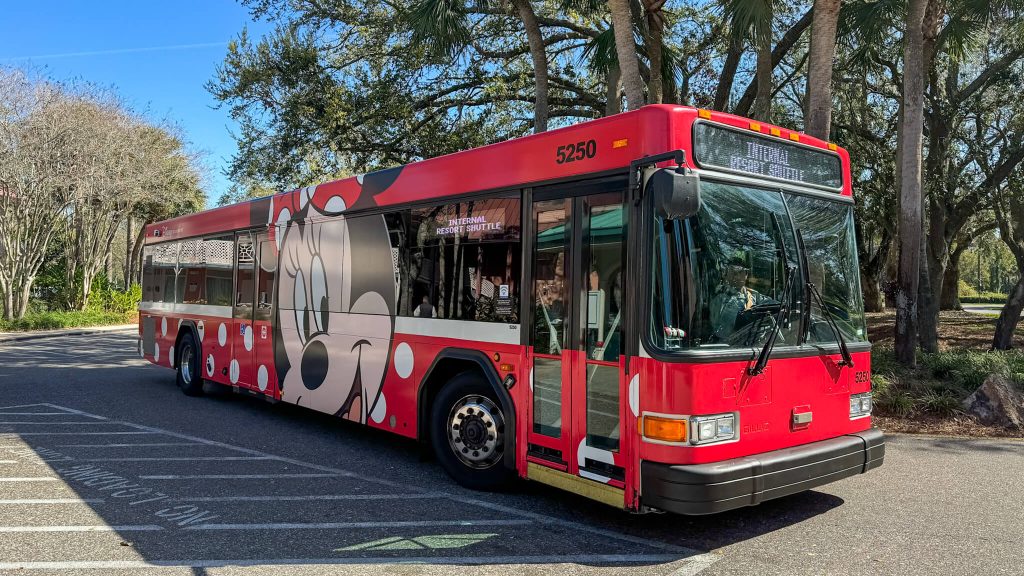
- Using Disney transportation, which is reliable and complimentary for resort guests. The only transportation cost we factor in is getting to and from the airport.
The Short Version
Our whole approach boils down to:
- Deciding we want to go
- Setting a fixed core budget for the trip (park tickets, resort, park hopper)
- Creating a travel fund
- Setting up automation + lump sum savings
That’s it. This is the exact savings plan we revisit every single year to save $8,000 for our Disney trip. While Disney isn’t getting any cheaper, it doesn’t have to break the bank. It can be something you strategically plan for over time at whatever price point makes sense for your family.